What is TCM?
Traditional Chinese Medicine & Its Holistic Philosophy
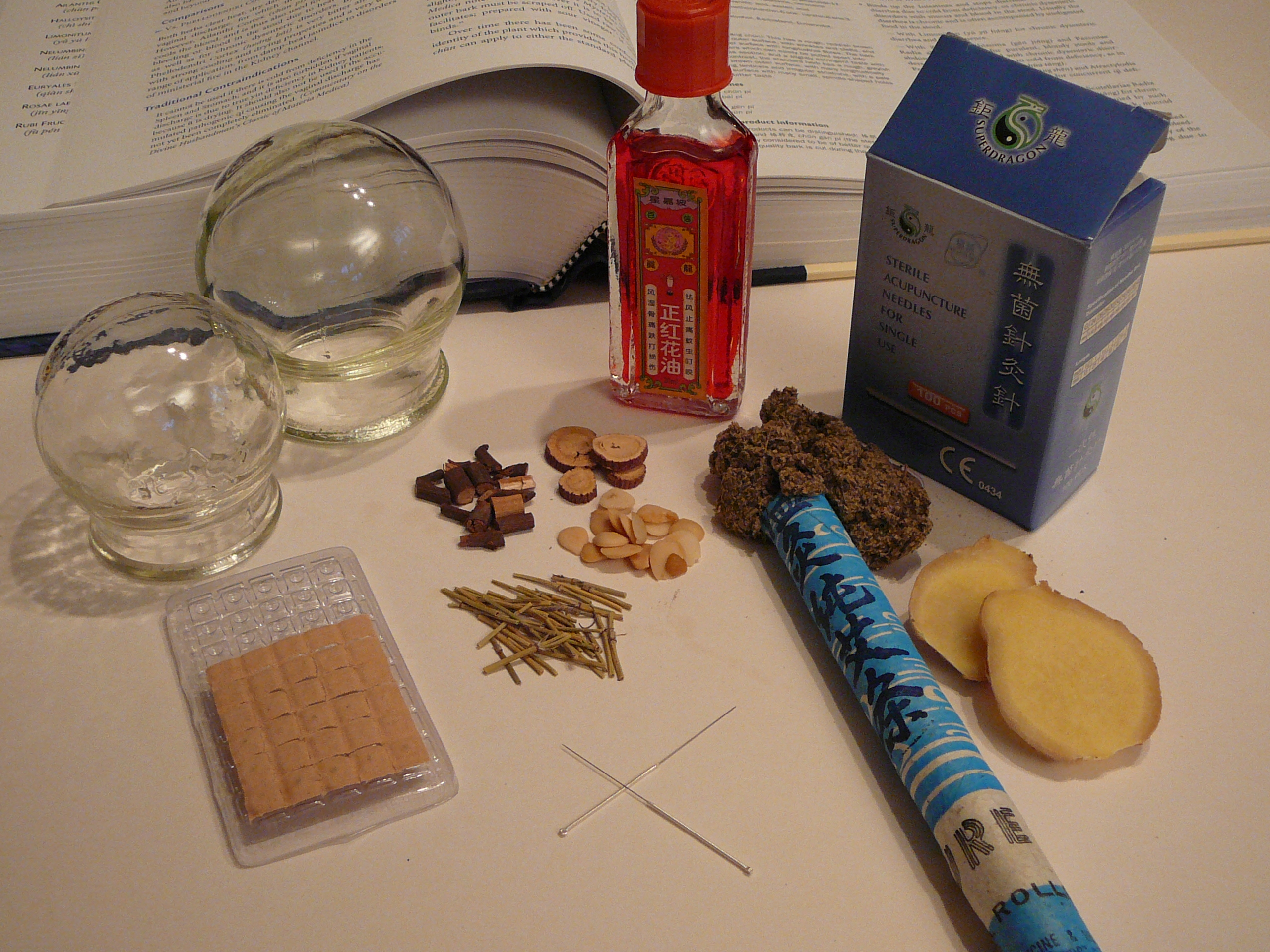
Traditional Chinese medicine (TCM) has a rich history spanning approximately 4,000 years. It distinguishes itself from Western medicine by its own underlying medical theory and therapeutic techniques, and its origin and development are intimately linked to Man’s experience of living close to his natural environment. TCM encompasses acupuncture, the use of moxibustion, cupping, Chinese herbal medicine, dietary therapy and tuīná (Chinese massage).
Qì 气 and Yīn & Yáng 阴阳
A couple of underlying theories in Chinese medicine include those of Qì 气 (pronounced ‘chee’, often translated as ‘energy’) and forms our fundamental life force, together with Yīn and Yáng 阴阳, opposite yet interdependent forces which correspond to the cyclical movements seen in the natural world (e.g. darkness changing to light).
Qì flows throughout the body via an elaborate network of channels (meridians). Whilst these channels are not visible, each one has numerous acupuncture points along its length. It is into these points that very fine needles are inserted, thus influencing the flow of Qì and restoring harmony within the body.
In health, Qì flows smoothly, but should it become blocked or irregular, it creates disharmony or ill health. Patterns of imbalance are identified using four diagnostic methods – looking, hearing/smelling, asking and feeling, all of which take into account the physical, mental/emotional and spiritual condition of the patient. A personalised treatment plan is then devised which comprises some, or all, of the disciplines listed above.
Proactive Prevention
TCM is a holistic system of health care, important not only in the re-active treatment of disease, but also in its pro-active prevention. Little wonder then that common Chinese sayings include:
- “A good doctor treats a disease before it occurs”
- “Treating disease by the time it is manifest is like starting to dig a well when you are dying of thirst”
Western Scientific Research & Acceptance
Western medicine is increasingly accepting of the use of acupuncture, particularly in helping to relieve painful conditions. Researchers (e.g. Pomeranz, B. 1991, 1996) found that acupuncture affects the nervous system, releasing chemicals known as endorphins which are the body’s natural painkillers.
Studies have also demonstrated how acupuncture can increase blood flow to aid healing, and this increasing of blood flow is one of several reasons for the interest in combining in-vitro fertilisation (IVF) with acupuncture (e.g. Sandberg, M. et al 2003, Stener-Victorin, E. et al 1996).